
results
What Changes When the Financial View Finally Catches Up to the Business
Growth can quickly make the financial view leaders rely on too simple for the decisions in front of them.
The work below shows what changes when scattered information becomes clearer profitability insight, stronger decision support, and a more useful basis for action.
When the Business Evolved, the P&L Had to Evolve With It
Approach
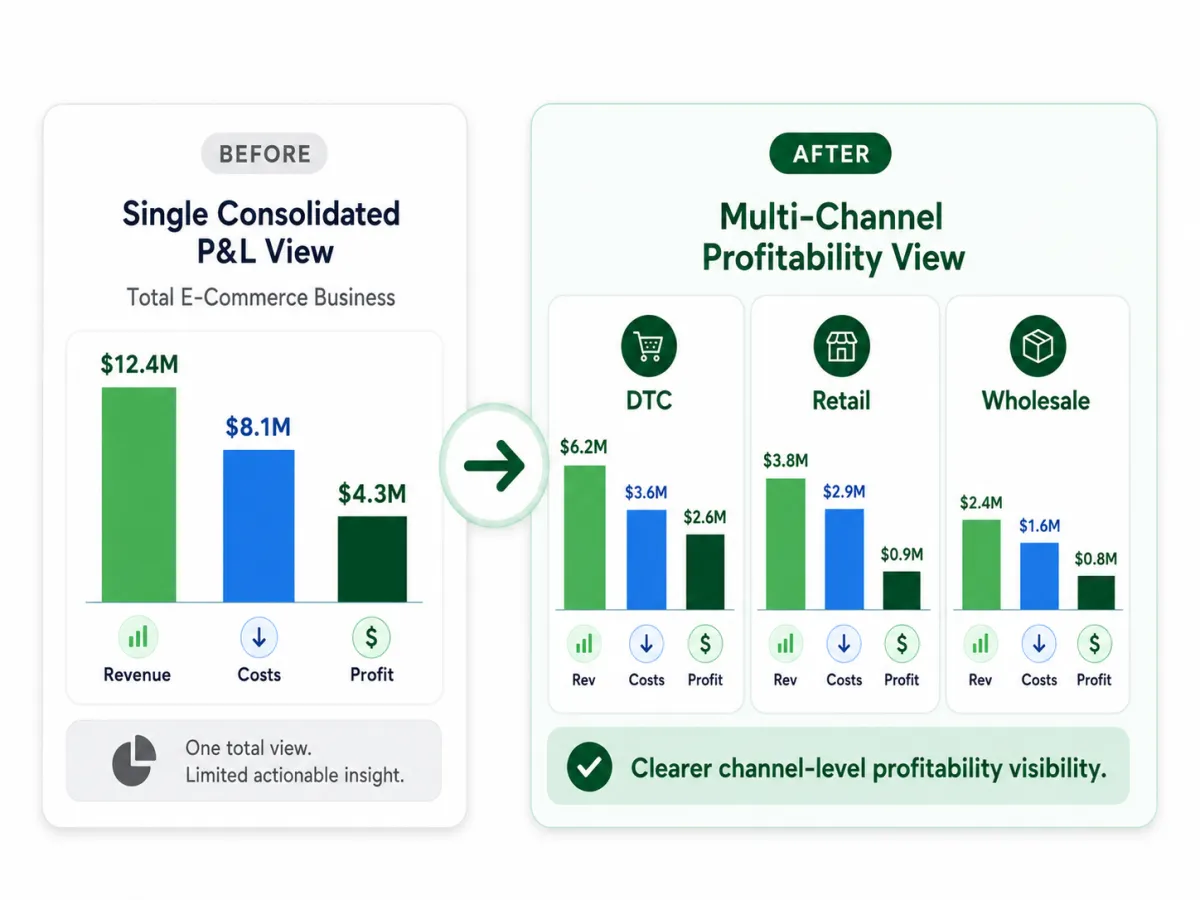
The P&L evolved from one consolidated e-commerce view into a more detailed, multi-channel profitability model. Revenue, expenses, and profitability were structured around the emerging sales and fulfillment channels so leaders could see the economics of the business more clearly.
Result
Leadership gained a clearer view of which channels were driving performance and where costs were accumulating. The financial model better reflected how the business actually operated, creating a more consistent basis for evaluating channel performance and future decisions.
When Six Possible Paths Needed One Clear Decision Process
Approach
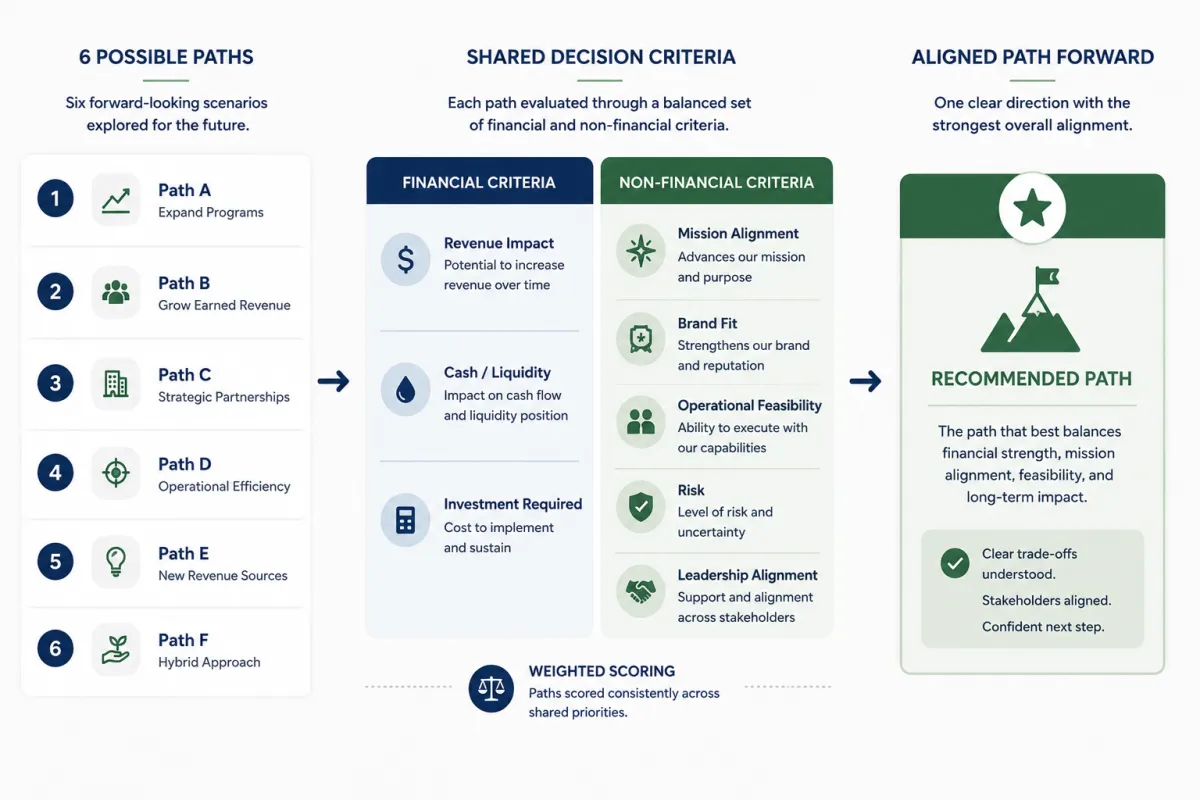
Six forward-looking scenarios were developed to show the revenue assumptions, expense requirements, liquidity implications, and operating choices behind each path. Leadership then used a structured prioritization framework with shared financial and non-financial criteria — including strategic fit, mission alignment, and risk — to compare the options on the same basis.
Result
Leadership and the board entered the decision with a clearer understanding of what each path offered, what it required, and how each option aligned financially and strategically. Instead of an open-ended debate, the organization had a more repeatable, evidence-based process for reaching alignment.
When a Large Investment Portfolio Needed Clearer Priorities
Approach
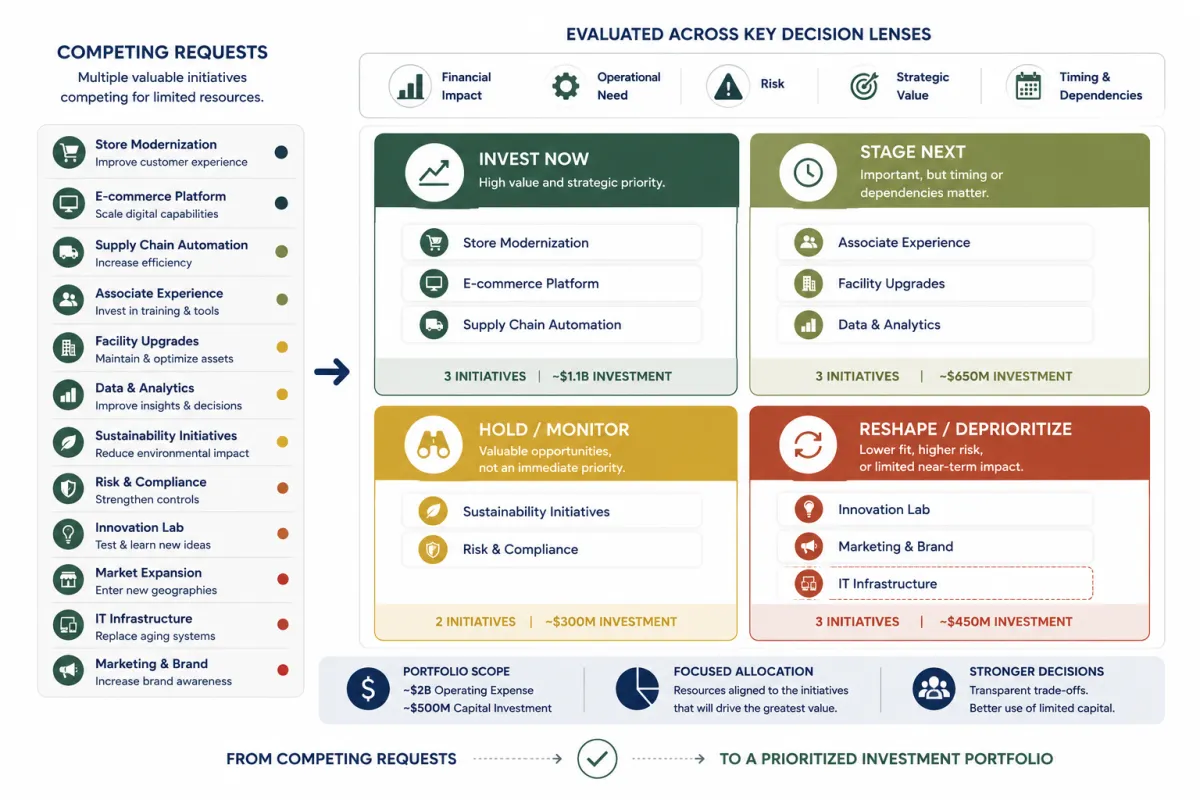
Strategic finance support covered approximately $2B in operating expense and $500M in capital investment. Proposed initiatives were evaluated across financial impact, operational need, risk, strategic value, timing, and resource requirements, then translated into a clearer portfolio view for senior leaders.
Result
Leadership gained a stronger basis for deciding where to fund, delay, reshape, or deprioritize investment. Instead of evaluating individual requests in isolation, the organization could see the portfolio together and concentrate resources around the priorities that mattered most.
What Clients and Partners Experience


Decision Clarity
“The turning point came when we could finally see the financial impact of each option side by side. What had felt like a broad strategic debate became a much clearer decision.”

Priority Alignment
“Before this work, we were discussing priorities from different perspectives without a consistent way to compare them. Once the decision criteria were defined and weighted, the conversation became much more focused.”

Profitability Visibility
“The biggest shift was moving from a high-level view of performance to understanding what was actually driving it. That visibility gave us a much stronger foundation for the decisions ahead.”
Your Business May Be Ready for the Same Kind of Clarity
If growth has made the business harder to see clearly, you do not have to wait until the next decision becomes an expensive one.
Bring the decision, profitability question, or pressure point in front of you. We’ll determine the right place to start.

Get practical perspectives on profitability, growth decisions, and strategic finance.
Occasional insights to help you turn financial information into clearer business decisions.
© 2026 CULTIVATE VISION CONSULTING LLC
[email protected] · (678) 271-1064